cat feeders / Cats
Best Cat Puzzle Feeders to Slow Down Mealtime and Beat Boredom
Slow down a gulping cat and beat boredom with a puzzle feeder that turns mealtime into a hunt
Reviewed August 13, 2026
We may earn a commission if you buy through these links, at no extra cost to you.
Your cat clears the bowl in under a minute, then paces the kitchen looking for the next thing to knock off the counter. Gulped meals and long boring afternoons feed each other, and an indoor cat with nothing to hunt tends to eat out of habit rather than hunger. A puzzle feeder breaks that cycle. It turns a thirty-second meal into a slow game of paws, noses, and patience, which stretches out the eating and hands a bored cat a job to do. The right one keeps a cat working for kibble instead of begging for it, and it can ease the vomiting that comes from scarfing food too fast. This roundup of the best cat puzzle feeder options walks through a strong all-around pick plus two alternatives, what each does well, and where each falls short.
Quick picks
For most cats, a feeder that fits their skill level beats a complicated maze they abandon by day two. The best cat puzzle feeder for your home depends on how food-motivated your cat runs and how much scattered kibble you can tolerate on the floor.
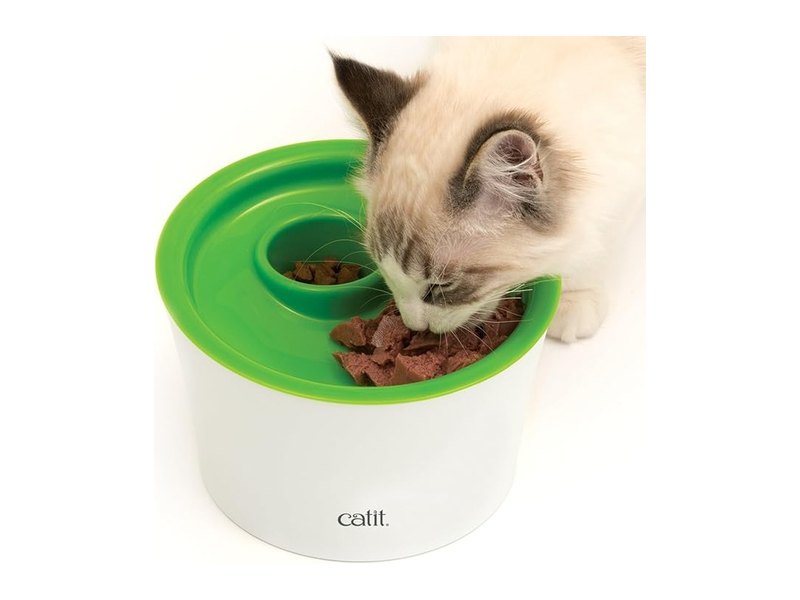
Featured pick: Catit Senses 2.0 Multi Feeder, Interactive Cat Toys
Catit Senses 2.0 Multi Feeder, Interactive Cat Toys earns a 4.4 out of 5 star rating, and at $12.99 it sits at a price most owners can try without much risk. The design mixes several difficulty levels into one unit, so you start a beginner cat on the easy openings and move to the harder channels as she figures out the game. It handles dry food and treats alike, which lets you run it as a full meal feeder or an afternoon distraction. The unit holds a fair amount of kibble, so you skip the every-hour refills. Many owners report their cats take to it within a day or two, though a few stubborn eaters need coaxing with a favorite treat dropped into the easiest opening at first. The raised design keeps kibble off the floor better than a flat tray, which helps in homes where a second cat likes to swoop in and clean up spills. Cleaning takes some effort since kibble dust settles into the channels, so plan on a rinse between meals.
Pros:
- Adjustable difficulty grows with your cat’s skill
- Works for both kibble and treats
- Slows fast eaters without frustrating them into quitting
- Priced low enough for a first try
Cons:
- Channels need regular cleaning to stay fresh
- Determined cats may tip or slide it across the floor
Trixie 5-in-1 Activity Center for Cats
The Trixie 5-in-1 Activity Center packs several games into one board, so a cat that masters one station still has four more to solve. That variety holds a curious cat’s attention longer than a single-trick feeder, and the flat profile suits cats that dislike reaching into deep cups. It handles treats better than a full meal, since the wells hold only small amounts, and a determined cat can slide it around the room without a mat underneath.
Doc & Phoebe’s Indoor Hunting Cat Feeder
Doc & Phoebe’s Indoor Hunting Cat Feeder takes a different route. You fill several soft mice with kibble and tuck them around the house, so your cat hunts and pounces for each portion the way an outdoor cat would. The approach suits energetic indoor cats that need mental work, and it spreads eating across the day instead of one rushed bowl. The catch is setup, since you refill and rehide the mice every time, which asks more of you than filling a single dish.
Buying guide
Match the puzzle to the cat, not the other way around. A food-obsessed cat bulldozes through an easy feeder and needs a harder design to stay challenged, while a timid or senior cat quits fast when the openings feel like work. Start easy and raise the difficulty as your cat gains confidence, and drop back a level if she walks away hungry for a couple of days.
Think about the food you plan to use. Dry kibble rolls and drops cleanly through most puzzle feeders, but wet food gums up the channels and turns cleaning into a chore. If your cat eats mostly wet food, a puzzle feeder works better for treats and dry snacks than for the main meal.
Cleaning decides whether a feeder stays in the rotation or ends up in a cupboard. Units with deep narrow channels trap crumbs and oils, so look for one you can rinse quickly or drop in the dishwasher when daily washing sounds like too much. The best cat puzzle feeder is the one your cat actually uses, and a grimy feeder you dread cleaning gets used less.
Consider the floor and the cat’s habits. A light feeder slides when a strong cat paws at it, so a non-slip base or a placemat underneath keeps the game in one spot. A puzzle feeder handles the boredom and the speed, not the schedule, so pair it with an automatic cat feeder if you also need timed meals while you are out of the house.
Comparison table
| Product | Best for | Price range | Difficulty |
|---|---|---|---|
| Catit Senses 2.0 Multi Feeder | Most cats and beginners | $ | Adjustable |
| Trixie 5-in-1 Activity Center | Cats that bore quickly | $$ | Multi-station |
| Doc & Phoebe’s Indoor Hunting Feeder | High-energy indoor hunters | $$ | Hide-and-seek |
A puzzle feeder pays off twice, slowing a fast eater and giving a restless cat something to think about. The best cat puzzle feeder is simply the one your cat keeps coming back to, and the Catit Senses 2.0 Multi Feeder, Interactive Cat Toys makes a low-risk place to begin. Its 4.4 star rating and $12.99 price let you test the idea without much outlay, and the adjustable difficulty keeps it useful as your cat gets sharper. Start on the easy setting, sprinkle in a few treats to spark interest, and let mealtime turn into the hunt your indoor cat has been missing.
Best Cat Puzzle Feeders to Slow Down Mealtime and Beat Boredom
Check price